
Every week we choose a new Word of the Week. You can find the word here on our website and on Instagram. Take a look and learn new words!
Houdoe
Houdoe is een Brabants woord. Mensen in Brabant zeggen dit als ze afscheid nemen. Het betekent: “zorg goed voor jezelf” of “doei”. Je hoort het vaak in de winkel, op straat of op school. Het is een vriendelijk woord.

Word of the Week: Culture edition
Beschuit met muisjes! 🍼🎊
In the Netherlands, we celebrate the birth of a baby in a special way: with “beschuit met muisjes”! Blue for a boy, pink for a girl. 💗💙
Did you know that this tradition dates back centuries? The aniseed in the “muisjes” is believed to bring luck and prosperity to the newborn.
Have you ever tried it?👶

word of the week: Kolossaal 🦖
Translation: Colossal
"Kolossaal" is used to describe something immense, gigantic, or impressive.
It can be applied to convey the vastness of an object or the significance of an event.
👉Example:
"Het nieuwe gebouw in het centrum is kolossaal!"
"The new building in the city center is colossal!"
What colossal moment have you experienced recently?

Word of the week: Griezelig
🎃👻 This week's word is griezelig!
Perfect for Halloween, because who doesn't love a little chill down their spine this season? From haunted houses to spooky stories, griezelig describes everything that gives us the creeps.
Have you experienced anything griezelig? Let us know in the comments! 🕸️🕯️

Word of the Week: Gezellig
"Gezellig" is an essential Dutch word that's almost impossible to translate directly.
It captures a feeling of cosiness, warmth, friendliness, and atmosphere—but it’s so much more than that!
It’s all about togetherness, comfort, and creating a pleasant vibe.
👉 Examples:
1. An evening with friends: "Dit is zo gezellig!"
2. Sharing coffee in a cosy café: "Wat een gezellig moment."
3. And you know what else will be gezellig? The STE End of Year Party! 🎉 Don’t miss it!

Word of the Week: Jip-en-Janneketaal 🖍️📖
"Jip-en-Janneketaal" is a distinctly Dutch expression that refers to simple and clear language.
It originates from the well-known children’s book series Jip and Janneke by Annie M.G. Schmidt. ✨
Can you use Jip-en-Janneketaal?
It means explaining something in basic words so that everyone can understand.
It’s perfect for making complex topics accessible to a wide audience!
👉 Example: Instead of saying: "The implementation of this innovative strategy will result in increased efficiency within our operational processes."
You would say in Jip-en-Janneketaal: "With this new approach, we work faster and better."

Word of the Week: Sinterklaas
Sinterklaas is a essential Dutch tradition that children eagerly anticipate every year! This beloved saint travels from Spain on his steamboat, laden with presents and treats like pepernoten and chocolate letters. ⛵
The celebration takes place on the 5th of December, but the excitement begins much earlier with his grand arrival in November. 🎉
Children put their shoes out, sing traditional Sinterklaas songs, and hope to find a small gift or sweet treat the next morning.🍫🍬
Did you know that Sinterklaas has been a major inspiration for Santa Claus in other countries? 🌍

Word of the Week: Schatje Patatje 🍟💖
Schatje patatje is a playful and endearing Dutch phrase used as a nickname for someone you find adorable or special.
It combines two delightful things: schatje (a term of endearment like "darling") and patat (chips or fries—because who doesn’t love fries?). Perfect for your best friend, partner, or anyone you want to make smile! 😍
By the way, this phrase is also a little hint for tomorrow’s exciting event—stay tuned! 👀
👉 Example:
"Thank you for helping me move house, schatje patatje!"
''You are my schatje patatje!''

Word of the Week: Nostalgie
✨ This week, we’re learning the word "nostalgie!" ✨
📖 What does it mean? Nostalgie is the feeling of longing for the past, often for a time that is remembered as pleasant or special. It can refer to memories from your childhood, a specific moment, or an old place.
👉 Example:
Toen ik naar oude foto's keek, kwam er veel nostalgie naar boven.
Het liedje bracht een gevoel van nostalgie over mijn jeugd.
💡 Do you ever feel nostalgie? What is your most cherished memory?

Word of the Week: Kletskous 🗣️
Kletskous is a playful Dutch word for someone who loves to talk—your classic chatterbox! Whether it’s stories, updates, or just random thoughts, they always have something to say. 😄
👉 Example:
"Jij bent echt een kletskous, maar ik vind het leuk!"
"Hou even op met praten, kletskous!"

Word of the Week: Reizen ✈️🌍
🧠 Type of word:
Reizen is a verb. You can say: "Ik vind het erg leuk om te reizen naar nieuwe landen."
👉 Example:
Volgende zomer wil ik naar Italië reizen.
Hij reist vaak voor zijn werk naar andere steden.
💡 Do you like traveling? Where would you love to go? 🌎✈️
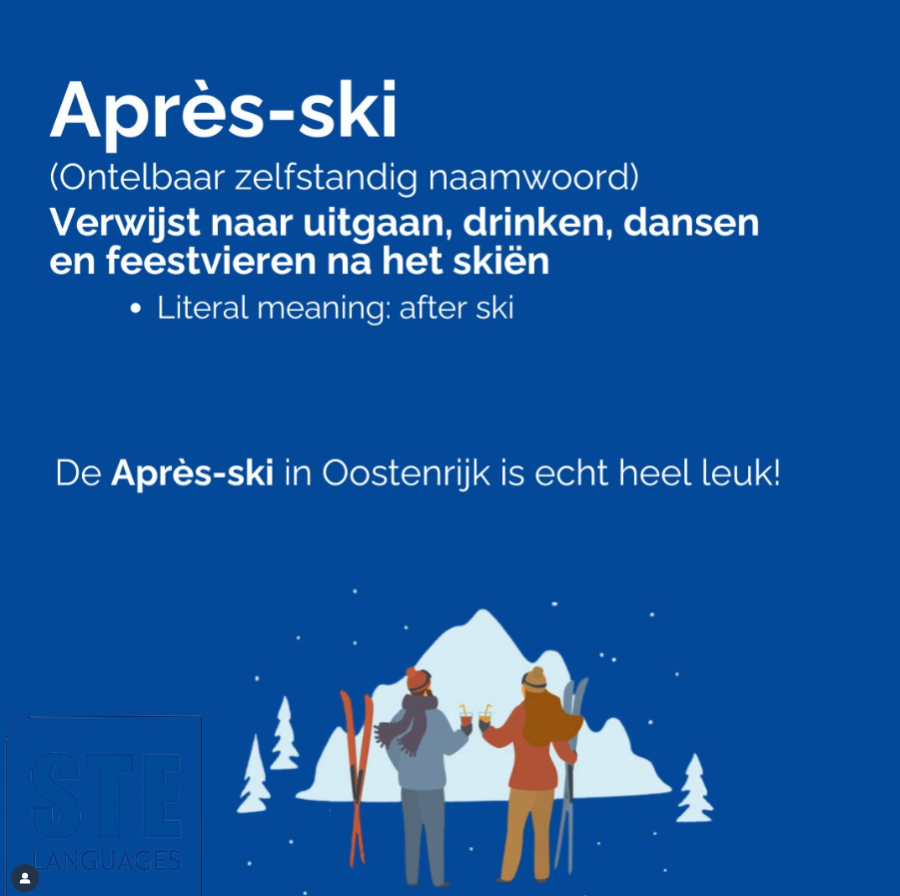
Word of the Week: Après-ski 🏔️🍷
🧠 Type of word:
Après-ski is a noun. It refers to the social activities or events that take place after a day of skiing. For example: "Na een dag skiën genieten we van après-ski in de hut."
👉 Example sentences:
Na het skiën gingen we naar de après-ski om een drankje te doen.
Zij hebben altijd veel plezier tijdens de après-ski na een dag op de berg.
💡 Do you enjoy skiing or snowboarding? What’s your favorite part of the après-ski experience? ⛷️🍻

Word of the Week: Uit de oude doos 🏺
🧠 Type of word:
"Uit de oude doos" is an expression in Dutch that literally translates to "out of the old box." It refers to something that is old-fashioned or outdated, often used when talking about things from the past that are brought up again. For example: "Deze muziek komt echt uit de oude doos, maar ik vind het nog steeds leuk!"
👉 Example sentences:
Het idee om de oude meubels opnieuw te gebruiken komt echt uit de oude doos, maar het is een geweldig idee!
Tijdens het gesprek kwamen er een paar verhalen uit de oude doos naar boven.
💡 Do you ever find yourself reminiscing about things from the past? What’s something from "the old box" that you still enjoy? 🎶📼

Word of the Week: Borrel
🧠 Type of word:
"Borrel" is a Dutch word that refers to a small alcoholic drink, often enjoyed in social settings or gatherings. It can also refer to the casual event or gathering itself, where people come together to have drinks and socialize. For example: "Laten we vanavond een borrel doen na het werk!"
👉 Example sentences:
We hebben een borrel gepland met vrienden dit weekend.
Na een lange werkdag is een borrel wel verdiend!
💡 Do you enjoy socializing with friends over a drink? What’s your favorite drink for a casual borrel? 🍷🥂

Word of the Week: Spitsuur
🧠 Type of word:
"Spitsuur" is a Dutch word that refers to the "rush hour" – the time during the day when traffic is the heaviest due to people commuting to or from work or school. It typically happens in the morning and late afternoon. For example: "Het spitsuur is altijd druk op de snelweg."
👉 Example sentences:
Ik probeer altijd voor het spitsuur op mijn werk te zijn om de drukte te vermijden.
Tijdens het spitsuur is het vaak moeilijk om een taxi te vinden.
💡 How do you feel about rush hour? Do you prefer to avoid it, or are you okay with the busy traffic? 🚗⏰

Word of the week: Puik
🧠 Type of word:
"Puik" is a Dutch word that means "excellent," "great," or "superb." It is used to describe something of very high quality.
👉 Example sentences:
Hij heeft een puik resultaat behaald op zijn examen! 🎉
Hij heeft een puike prestatie geleverd op zijn examen. 📚✅
💡 Wat vind jij puik? Heb je onlangs iets meegemaakt dat echt geweldig was? Deel het met ons! 😃🌟

Word of the Week: Suikerfeest
🧠 Type of word:
"Suikerfeest" (also known as Eid al-Fitr) is a Dutch term referring to the Islamic festival that marks the end of Ramadan, the month of fasting. It is a celebration of joy, gratitude, and sharing, often accompanied by special meals, sweets, and giving gifts. The celebration lasts for two days and this year it will start on March 30th.
👉 Example sentences:
Tijdens het Suikerfeest geven we altijd cadeaus aan familie en vrienden.
Het Suikerfeest is een tijd van samenzijn en het delen van lekkere gerechten.
💡 Have you ever celebrated Suikerfeest or been invited to a celebration? What is your favorite part of such festive occasions? 🎉🍬

Word of the Week: Pikant🌶️
🧠 Type of word:
"Pittig" is a Dutch adjective that can mean spicy (when talking about food) or tough/challenging (when describing situations, people, or tasks). It's a versatile word depending on the context!
👉 Example sentences:
Deze curry is behoorlijk pittig, ik krijg het er warm van! 🌶️🔥
De training was best pittig, maar ik voel me er sterker door. 💪😅
💡 Houd jij van pittig eten? Of heb je laatst iets meegemaakt dat je pittig vond? Deel je ervaring met ons! 😄👀

Word of the Week: Paashaas
🧠 Type of word:
"Paashaas" is a Dutch word that means "Easter Bunny." It refers to the folkloric rabbit that brings Easter eggs to children, especially during Pasen (Easter). The paashaas is a fun symbol of spring, new life, and celebration.
👉 Example sentences:
De paashaas heeft overal chocolade-eieren verstopt in de tuin. 🐰🍫
Kinderen zoeken enthousiast naar eieren die de paashaas heeft achtergelaten. 🧺🥚
💡 Geloofde jij vroeger in de paashaas? Of heb je ooit eieren verstopt voor iemand anders? Vertel het ons! 🌸🐣

Word of the Week: Koningsspelen
🧠 Type of word:
"Koningsspelen" is a Dutch noun (meervoud) that refers to the King's Games – a yearly sports and activity day for school children in the Netherlands, held in honor of Koningsdag (King's Day). Het is een vrolijk en actief evenement vol sport, spel en plezier! 👑🏃♀️🏅
👉 Example sentences:
Tijdens de Koningsspelen dragen de kinderen oranje kleding en doen ze mee aan allerlei sportactiviteiten. 🧡🎽
Onze school organiseert elk jaar leuke spellen voor de Koningsspelen, zoals zaklopen en touwtrekken. 🎉🤸
💡 Heb jij ooit meegedaan aan de Koningsspelen? Wat vond je het leukste onderdeel? Deel je herinnering met ons! 🙌✨
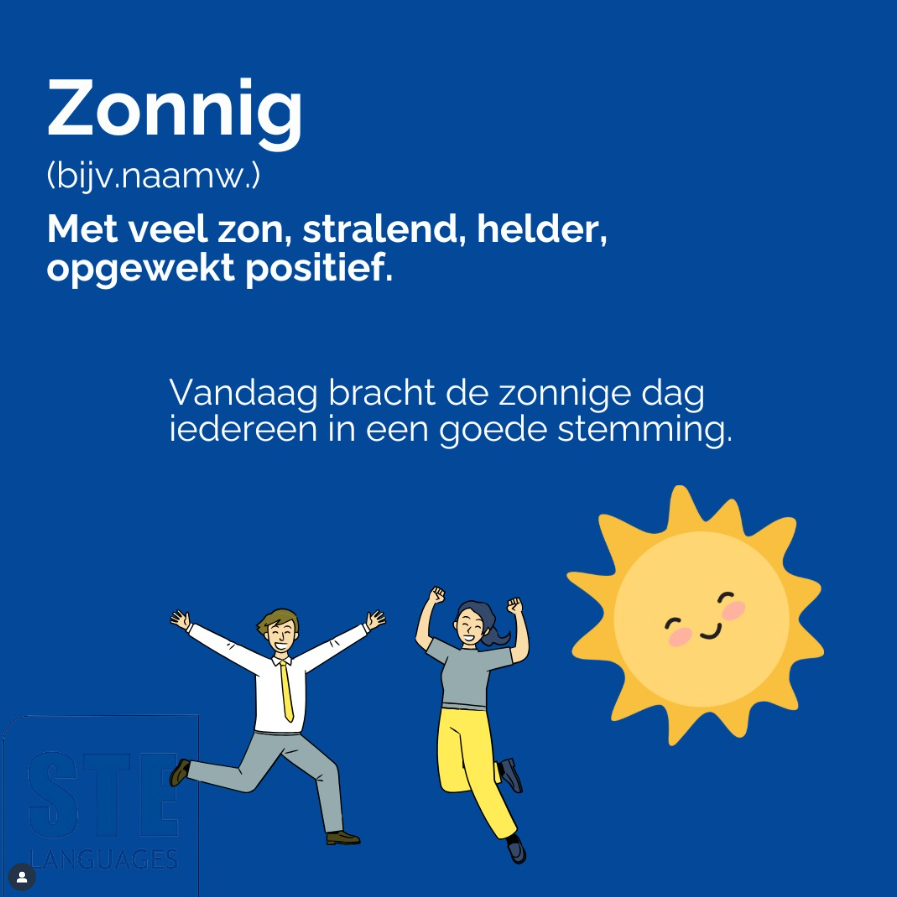
Word of the Week:
🧠 Type of word:
"Zonnig" is a Dutch adjective that means "sunny." It describes weather with lots of sunshine, but it can also be used figuratively to describe something cheerful or positive. ☀️😄
👉 Example sentences:
Het is vandaag heerlijk zonnig, perfect weer voor een picknick! 🧺🌞
Ze heeft altijd een zonnige glimlach, zelfs op een regenachtige dag. 😊🌦️
💡 Do you enjoy zonnige days? What’s your favorite thing to do when the sun is shining? Share your sunny moments! 🌻🏖️

Word of the Week: Kletskop
🧠 Type of word:
"Kletskoppen" is a Dutch noun that refers to a type of traditional Dutch cookie. These are thin, crispy biscuits made primarily from butter, brown sugar, and almonds. The name literally means “chatter heads”, which might refer to their cracked appearance or the light, snappy texture.
👉 Example sentences:
Mijn oma bakt elke kerst heerlijke kletskoppen voor de hele familie.
In dat oude café kun je koffie drinken met een paar zelfgemaakte kletskoppen erbij.
💡 How do you feel about traditional cookies like kletskoppen? Do you enjoy baking them yourself, or do you prefer buying them fresh from a bakery? 🍪👨🍳
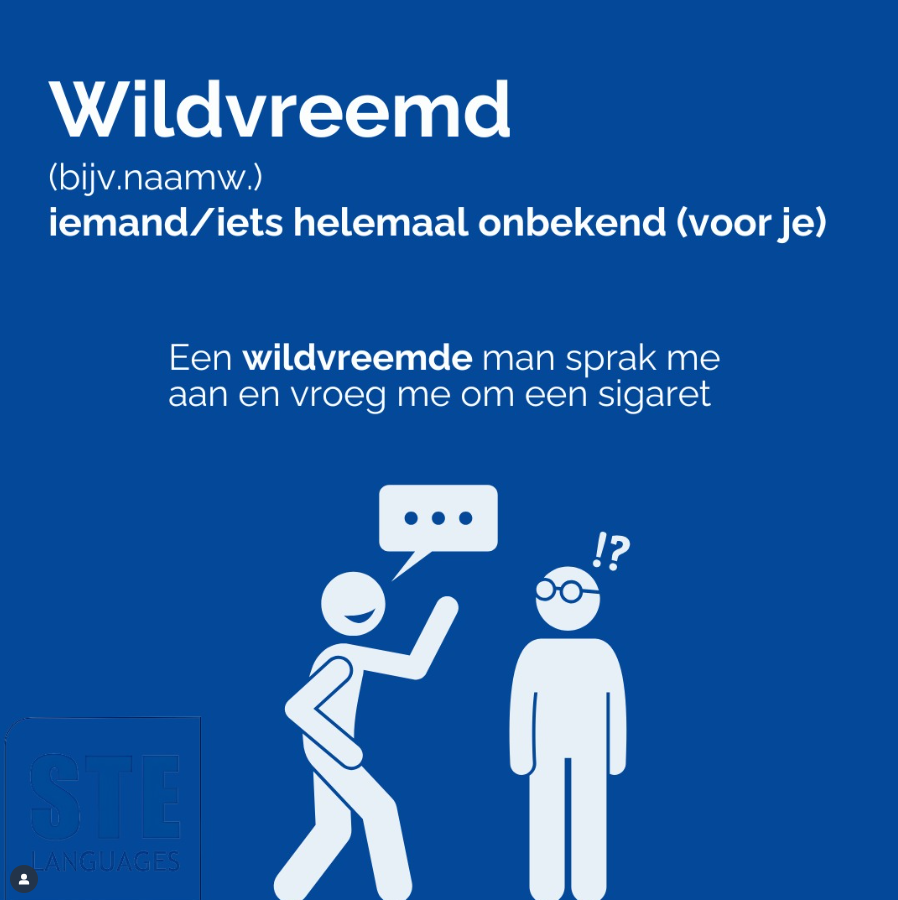
Word of the Week: Wildvreemd 🤷♂️🤷♀️
🧠 Type of word:
"Wildvreemd" is a Dutch adjective that means completely unknown or a total stranger. It's often used to describe people you’ve never met before.
For example: "Ik zat in de trein naast een wildvreemde, maar we hadden een leuk gesprek."
👉 Example sentences:
Hij gaf zijn sleutel aan een wildvreemde – dat zou ik echt nooit durven!
Het voelde raar om in een kamer vol wildvreemden te zijn, maar uiteindelijk was het best gezellig.
Ze begon zomaar een gesprek met een wildvreemde op straat.
💡 Heb jij ooit een leuk gesprek gehad met een wildvreemde? Of misschien iets onverwachts meegemaakt met iemand die je totaal niet kende? 🌍🗣️

Word of the Week: Uitwaaien
🧠 Type of word:
"Uitwaaien" is a Dutch verb that means "to go outside to clear your head and get some fresh air," often by walking or cycling in the wind. It's typically Dutch - taking a break on the beach, in the forest or through the polder.🌬️🚶♀️🌳
👉 Example sentences:
Na een drukke werkdag ga ik graag even uitwaaien op het strand. 🌊🧘
We zijn vanmiddag lekker gaan uitwaaien in het park, dat deed echt goed. 🍃😊
💡 Wat is jouw favoriete plek om uit te waaien? De duinen, het bos, of misschien gewoon een rondje door de buurt? Laat het weten! 🌬️🌞

Word of the Week: Toets
🧠 Type of word:
"Toets" is a Dutch word that means test or exam. It’s commonly used in schools, language courses, or any educational setting to check your knowledge. For example: "Ik heb morgen een belangrijke toets Nederlands."
👉 Example sentences:
📚 De toets was moeilijk, maar ik denk dat ik een voldoende heb gehaald.
📝 We krijgen elke maand een toets om onze voortgang te meten.
💡 How do you feel about taking tests?
Vind je toetsen spannend of juist motiverend? Wat doe jij om je goed voor te bereiden? 🤔📖

Word of the Week:
🧠 Type of word:
"Zwerfafval" is een Nederlands woord dat verwijst naar afval dat op straat of in de natuur is achtergelaten, in plaats van netjes in een prullenbak te worden gegooid. Het kan gaan om dingen zoals plastic flesjes, blikjes, sigarettenpeuken of snoeppapiertjes. Bijvoorbeeld: "Er ligt veel zwerfafval in het park na het festival."
👉 Voorbeeldzinnen:
Elke zaterdag helpt mijn buurman mee om zwerfafval op te ruimen in de wijk.
Zwerfafval is slecht voor het milieu en gevaarlijk voor dieren.
💡 Wat vind jij van zwerfafval? Stoort het je als je afval op straat ziet liggen? Of help je soms mee met opruimen? 🗑️🌍

Word of the Week: Lenen
🧠 Type of word:
"Lenen" is a Dutch verb that means to borrow — je gebruikt iets dat van iemand anders is, meestal tijdelijk. Je kunt ook geld lenen bij de bank of boeken bij de bibliotheek.
For example: "Mag ik jouw jas even lenen? Het regent."
👉 Example sentences:
Ik ben mijn boek vergeten, mag ik er eentje van jou lenen?
Zij heeft geld geleend om haar studie te betalen.
Je kunt gratis boeken lenen bij de bibliotheek.
💡 Wat leen jij wel eens? Een boek, een fiets, geld? En leen jij liever iets, of geef je liever iets aan anderen om te lenen? 📚🚲💸

Word of the Week: Toets
🧠 Type of word:
"Toets" is a Dutch word that can refer to a key on a keyboard or device. It's what you press when you're typing or entering something on a machine. For example: "Druk op de juiste toets om door te gaan."
👉 Example sentences:
Ik heb per ongeluk op de verkeerde toets gedrukt en mijn bestand gesloten.
De spatiebalk is de grootste toets op het toetsenbord.
💡 Heb jij een favoriete toets op het toetsenbord? Misschien de enter-toets of de escape-toets? 💻⌨️

Word of the Week: Tussendoortje
🧠 Type of word:
"Tussendoortje" is a Dutch noun that refers to anything you eat between the three main meals of the day — like a snack or treat. Yes, even cake counts. 🍰
👉 Example sentences:
Na de lunch had ik nog trek, dus ik nam een klein tussendoortje.
Fruit is een gezond tussendoortje, maar soms kies ik liever voor chocola. 😄
💡 Wat is jouw favoriete tussendoortje? Iets hartigs zoals kaasblokjes of juist iets zoets zoals koekjes?

Word of the Week: Met de deur in huis vallen
🧠 Type of word:
"Met de deur in huis vallen" is a Dutch expression that means jumping straight to the point — no warming up, no chit-chat, just boom 💥... right into what really matters.
It literally translates to “to fall into the house with the door” — which sounds pretty intense, but hey, you definitely have everyone’s attention. 🚪😄
🟢 Synoniem: recht op het doel afgaan — to go straight for the goal.
👉 Example sentences:
• Ik val maar meteen met de deur in huis: heb je vanavond zin in pizza? 🍕
• Hij viel met de deur in huis: “Ik heb kaartjes voor Beyoncé, ga je mee?!” 🎤🔥
💡 Are you someone who gets straight to the point, or do you prefer to warm up with a little small talk first?
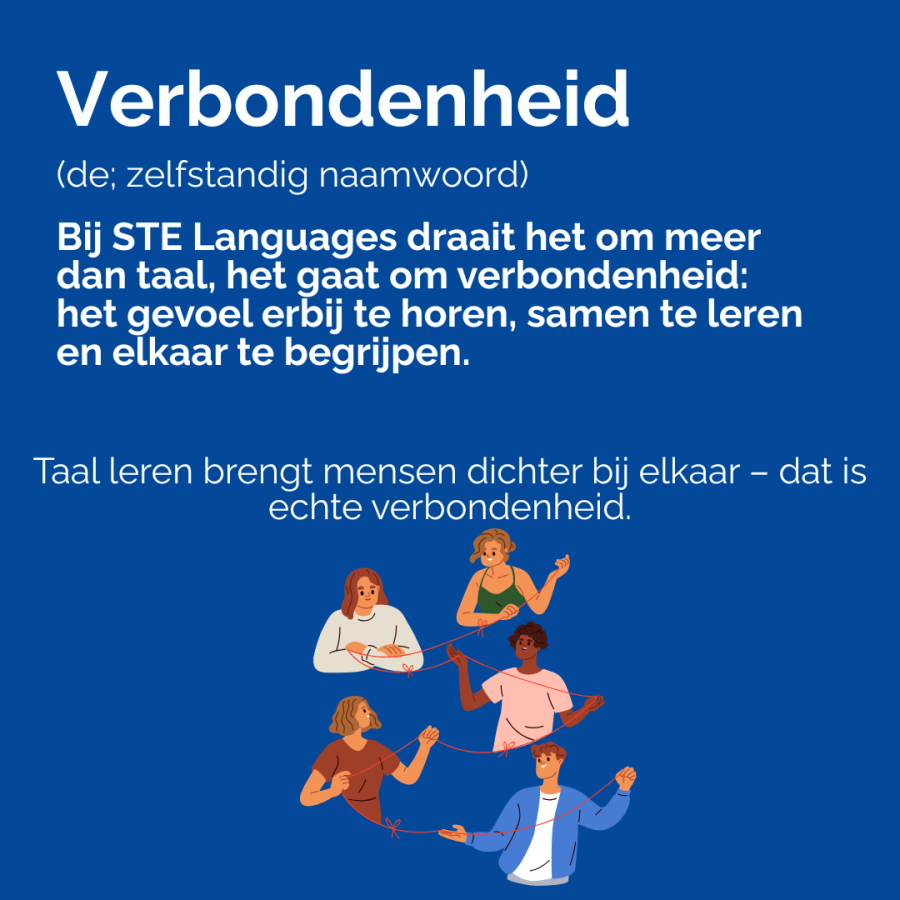
Word of the Week: Verbondenheid
🧠 Type of word:
"'Verbondenheid" is a Dutch word that captures the deep feeling of connection — not just being together, but truly feeling seen, heard, and part of something. 🧡
It comes from the verb verbinden, which means “to connect” or “to bind together.” So it’s about that invisible thread tying people, hearts, and experiences together.
🟢 Synoniem: saamhorigheid — the sense of unity or togetherness.
👉 Example sentences:
• In moeilijke tijden voel je vaak meer verbondenheid tussen mensen. 🤝
• Er was echte verbondenheid in de groep tijdens het kampvuur. 🔥
💡 When do you feel most connected to others? And who could use a little extra verbondenheid from you today?

Word of the Week: Glinsteren
🧠 Type of word:
"Glinsteren" is a Dutch word that evokes a magical kind of shine — a subtle, flickering sparkle like light dancing on water or stars winking in the night sky. ✨🌌
It comes from the verb glinsteren, which means to shimmer or to sparkle. It’s not about a harsh or blinding light, but a delicate, twinkling glow — often natural, often beautiful.
🟢 Synoniem: fonkelen — to twinkle or glimmer softly.
👉 Example sentences:
• De sneeuw glinsterde in het maanlicht. ❄️🌙
• Haar ogen glinsterden van geluk. 💫
💡 What in your life is quietly glinsterend right now — a small joy, a kind moment, or a spark of hope?

Word of the Week: Tekenfilm
🧠 Type of word:
"Tekenfilm" is a cheerful Dutch word that brings up memories of childhood, imagination, and colorful stories. 📺✨
It literally means “drawn film” — and refers to a cartoon or animated movie, made with drawings or animation instead of real actors.
Tekenfilms are often made for children, but many are enjoyed by adults too. They can be funny, emotional, magical, or even educational — and they often speak a universal language.
🟢 Synoniem: animatiefilm — animated film (more formal)
👉 Example sentences:
• Mijn kinderen kijken elke ochtend een tekenfilm voor school. 🎒
• We keken een tekenfilm met pratende dieren. 🐰🦊
• Vroeger keek ik tekenfilms op zaterdag met een kom cornflakes. 🥣📽️
💡 What’s your all-time favorite tekenfilm? And what did it teach you — about friendship, courage, or simply having fun? 🌈🎬

Word of the Week: Nieuwsgierig
🧠 Type of word:
"Nieuwsgierig" is a curious Dutch word that’s all about asking questions, exploring, and wanting to know more. 🔍🧠
It literally means “hungry for news” and it describes someone who’s eager to learn or discover something new.
Being nieuwsgierig can be positive (like being eager to learn) or a bit cheeky (like peeking at surprises), but it always shows a deep interest in the world around you.
🟢 Synoniem: leergierig — eager to learn
👉 Example sentences:
• Kinderen zijn van nature nieuwsgierig naar alles om hen heen. 👶🌍
• Ik ben nieuwsgierig naar jouw favoriete Nederlandse woord. 💬🇳🇱
• De kat keek nieuwsgierig door het raam naar buiten. 🐱🪟
🔸 Let op: While nieuwsgierig is often used in a positive sense, it can also have a less flattering meaning — like nosy in English. For example:
• Ik heb een nieuwsgierige buurvrouw die alles over iedereen wil weten.
(= I have a nosy neighbour who wants to know everybody’s business.) 👀🏘️
💡 What are you curious about — a new language, an unknown place, or maybe even yourself? Nieuwsgierigheid brings you further. 🚀💡

Word of the Week: Pretpark
🧠 Type of word:
🎢 "Pretpark" is a joyful Dutch word that instantly brings to mind thrills, fun, and laughter.
It literally means “fun park”, and it's the Dutch word for amusement park — a place full of attractions, roller coasters, shows, and unforgettable moments.
Going to a pretpark is often a highlight for kids (and let’s be honest for adults too!). Whether you're in it for the adrenaline or just the gezelligheid, a pretpark is all about having a good time.
🟢 Synoniem: attractiepark — amusement park
👉 Example sentences:
• We gaan dit weekend naar een pretpark met het hele gezin! 👨👩👧👦🎠
• De kinderen waren helemaal door het dolle heen in het pretpark. 🤩🎡
• In de zomer zijn pretparken vaak druk, maar supergezellig. ☀️🎢
🔸 Let op: Not all "pretparken" are the same, some focus on big rides and thrills, others on themed experiences or younger children. And in Dutch, pret is a light, cheerful word, it's all about fun, not just excitement.
💡 When was the last time you went to a theme park? And what was your favourite ride?

Word of the Week: Regenjas
🧠 Type of word:
🧥 "Regenjas" is one of those classic Dutch words that feels almost essential — because, let’s be honest, rain is part of the deal here.
It literally means “raincoat”, and it’s the go-to clothing item when the skies decide to open up (which happens… often 🌧️).
A regenjas keeps you dry while biking, walking, or waiting for the bus in the Dutch drizzle. Be it stylish or super practical, if you live in the Netherlands, you need one.
🟢 Synoniem: waterdichte jas — waterproof coat
👉 Example sentences:
• Vergeet je regenjas niet, het gaat straks keihard regenen! 🌧️🚴
• Mijn regenjas hangt standaard klaar bij de voordeur.
• Die felgele regenjas? Typisch Nederlands — en superhandig. 💛
🔸 Let op: Not every coat is a regenjas — it has to be made of waterproof or water-resistant material. Many come with a hood (capuchon), and some are foldable to keep in your bag “just in case”.
💡 What kind of raincoat do you own? Bright and bold, or simple and black?
In the Netherlands, you don’t wait for the sun — you grab your regenjas and go. ☔🚶

Word of the Week: Dromen
🧠Type of word:
🌟 "Dromen" is one of those Dutch words you’ll hear a lot — especially when people talk about their future goals or wishes.
Literally, een droom is something you see while you sleep 😴. But in everyday Dutch, it also means something you deeply want to achieve — like getting a new job, buying a house, traveling to another country ✈️, or learning a new language.
A droom can be small or life-changing. Whatever form it takes, it gives you direction, focus, and hope.
🟢 Synoniem: wens (wish), doel (goal)
👉 Example sentences:
• Als kind droomde ik van een leven in het buitenland. 🌍
• Mijn grootste droom is om muzikant te worden. 🎸
• Je moet je dromen volgen, ook als het moeilijk is. 💫
🔸 Let op: Not every droom becomes reality — but if you set clear goals and take it step by step, you can achieve more than you think. Dromen geven hoop en richting.
💡 What’s your dream? Write it down and take the first step today. 🌱✨

𝗪𝗼𝗿𝗱 𝗼𝗳 𝘁𝗵𝗲 𝗪𝗲𝗲𝗸: 𝗩𝗲𝗿𝘁𝗿𝗼𝘂𝘄𝗲𝗻 🤝✨
🧠 Type of word:
"Vertrouwen" is a Dutch noun that means trust or confidence. You can have vertrouwen in someone, in yourself, or in the future.
For example: "Ik heb vertrouwen in jou – je kunt dit!"
🟢 Synoniem: geloof/ zekerheid — trust/ confidence
👉 Example sentences:
• Ze had genoeg vertrouwen om de presentatie alleen te geven.
• Vertrouwen opbouwen kost tijd, maar het is heel belangrijk.
• Zonder vertrouwen is samenwerken moeilijk.
• Vertrouwen in jezelf, in de ander en in de toekomst helpt je om met meer rust keuzes te maken.
🔸 Let op:
"Vertrouwen" betekent dat je gelooft dat iemand eerlijk is, goed handelt, en doet wat hij of zij belooft. Het is een gevoel van zekerheid en veiligheid in de ander, zonder dat je steeds alles hoeft te controleren.
Er zijn verschillende vormen van vertrouwen:
• Vertrouwen in mensen: bijvoorbeeld vertrouwen in een vriend, partner, collega of ouder.
• Zelfvertrouwen: geloven in je eigen kunnen en keuzes.
• Vertrouwen in situaties of systemen: bijvoorbeeld vertrouwen in de overheid, wetenschap of een bedrijf.
• Vertrouwen in de toekomst: geloven dat dingen goed kunnen komen, zelfs als het nu nog onzeker is.
Vertrouwen betekent durven loslaten en geloven dat het goed komt — met een ander, met jezelf, of met iets groters.

𝗪𝗼𝗿𝗱 𝗼𝗳 𝘁𝗵𝗲 𝗪𝗲𝗲𝗸: 𝗢𝗲𝗳𝗲𝗻𝗲𝗻 💪📚
🧠 Type of word:
"Oefenen" is a Dutch verb that means to practise, to train, or to repeat something to get better at it.
You can oefenen for a test, a sport, a musical performance, or even to improve your Dutch!
For example: “Als je elke dag oefent, word je vanzelf beter!” (If you practise every day, you’ll get better automatically!)
🟢 Synoniem: trainen / herhalen — to train/ to rehearse/ to practice
👉 Example sentences:
• Ik moet mijn Nederlands vaker oefenen om vloeiender te spreken.
• Ze oefenen elke dag piano voor het concert.
• Door te oefenen krijg je meer vertrouwen in jezelf.
• Oefenen betekent fouten maken én daarvan leren.
🔸 Let op:
"Oefenen" isn’t about being perfect — it’s about growth. It’s an active process of repeating something with the goal of getting better.
Whether you’re learning a language, preparing for a test, or playing a sport — oefenen helps you grow stronger and more confident.
There are different kinds of practice:
• Practical: using your body or hands (e.g. biking, dancing, cooking)
• Mental: training your brain (e.g. studying, learning strategies)
• Creative: like practising drawing, playing music, or acting
• Social: practising conversations, listening, or working together

𝗪𝗼𝗿𝗱 𝗼𝗳 𝘁𝗵𝗲 𝗪𝗲𝗲𝗸: 𝗧𝗿𝗼𝘁𝘀💬✨
🧠 𝗧𝘆𝗽𝗲 𝗼𝗳 𝘄𝗼𝗿𝗱:
"Trots" is a Dutch noun (de-woord) and also an adjective.
It means that you are happy and proud of something you (or someone else) did.
You can feel trots when you try something new, work hard, or help someone.
𝗙𝗼𝗿 𝗲𝘅𝗮𝗺𝗽𝗹𝗲:
👉 “Ik ben trots op wat ik heb gedaan!”
(I’m proud of what I did!)
🟢 𝗦𝘆𝗻𝗼𝗻𝗶𝗲𝗺:
blij met jezelf / tevreden / fier (formal)
→ proud / happy with yourself
👉 𝗘𝘅𝗮𝗺𝗽𝗹𝗲 𝘀𝗲𝗻𝘁𝗲𝗻𝗰𝗲𝘀:
• Ik ben trots op mijn tekening.
• Ze voelde zich trots na de presentatie.
• Jij mag trots zijn op jezelf!
• Trots zijn betekent dat je blij bent met wat je hebt gedaan.
🔸 𝗡𝗼𝘁𝗲:
Trots is een gevoel. Je voelt je trots als je iets goed hebt gedaan.
Het helpt je om meer zelfvertrouwen te krijgen.
Iedereen mag trots zijn op zijn of haar groei — ook als het nog niet perfect is.


🏆 𝗪𝗼𝗿𝗱 𝗼𝗳 𝘁𝗵𝗲 𝗪𝗲𝗲𝗸: 𝗦𝘂𝗰𝗰𝗲𝘀 💬✨
🧠 Type of word:
"Succes" is a Dutch noun (het-woord).
It means that something goes well, or that you reach a goal you wanted to achieve.
You can wish someone succes before something important — like an exam, a game, or a presentation.
For example:
👉 “Succes met je toets!”
(Good luck with your test!)
🟢 Synoniem:
goede afloop / overwinning / geluk bij iets doen
→ success / achievement / good luck
👉 Example sentences:
• Ik wens je veel succes vandaag!
• Haar harde werk heeft succes opgeleverd.
• Succes komt vaak na veel oefenen.
• Een klein succes kan ook groot voelen.
🔸 Note:
Succes betekent niet alleen “iets winnen”.
Het kan ook betekenen dat je iets probeert, leert, of volhoudt — ook als het moeilijk is.
Iedere stap vooruit is een succes op zich! 🌱

🏆 𝗪𝗼𝗿𝗱 𝗼𝗳 𝘁𝗵𝗲 𝗪𝗲𝗲𝗸: 𝗢𝗻𝘁𝗱𝗲𝗸𝗸𝗲𝗻 💬✨
🧠 Type of word:
"Ontdekken" is a Dutch verb.
It means to find out, explore, or learn something new, often something you didn’t know before.
You can use it when you learn, try, or experience something for the first time. 🌍
For example:
👉 “Ik wil de wereld ontdekken.”
(I want to discover the world.)
🟢 Synoniem:
verkennen / leren kennen / uitvinden
→ discover / explore / find out
👉 Example sentences:
• Ik ontdek graag nieuwe plekken.
• We ontdekten iets bijzonders in het bos.
• Door te proberen ontdek je wat werkt.
• Kinderen ontdekken de wereld spelenderwijs.
🔸 Note:
Ontdekken gaat niet altijd om iets groots —
het kan ook zijn dat je iets nieuws over jezelf leert, of een kleine stap zet buiten je comfortzone.
Elke ontdekking begint met durven proberen, leren, en open staan voor wat komt. 🌱✨

𝗪𝗼𝗿𝗱 𝗼𝗳 𝘁𝗵𝗲 𝗪𝗲𝗲𝗸: 𝗗𝗮𝗻𝗸𝗷𝗲𝘄𝗲𝗹 💬✨
🧠 𝗧𝘆𝗽𝗲 𝗼𝗳 𝘄𝗼𝗿𝗱:
“Dankjewel” is a Dutch expression used to say thank you.
It’s informal and friendly — perfect for everyday situations when you want to show appreciation. 🙏
𝗙𝗼𝗿 𝗲𝘅𝗮𝗺𝗽𝗹𝗲:
👉 “Dankjewel voor je hulp!”
(Thank you for your help!)
🟢 𝗦𝘆𝗻𝗼𝗻𝗶𝗲𝗺𝗲𝗻:
bedankt / dank je / dank u (formeel)
→ thanks / thank you
👉 𝗘𝘅𝗮𝗺𝗽𝗹𝗲 𝘀𝗲𝗻𝘁𝗲𝗻𝗰𝗲𝘀:
• Dankjewel voor het luisteren.
• Ah, dankjewel! Dat is zo lief van je.
• Dankjewel dat je er was.
• Kleine woorden zoals “dankjewel” maken een groot verschil. 🌷
🔸 𝗡𝗼𝘁𝗲:
“Dankjewel” is een klein woord met grote kracht.
Het laat zien dat je iets waardeert — een gebaar, een moment, of iemand’s moeite.
Door dankjewel te zeggen, maak je niet alleen de ander blij,
maar herinner je jezelf ook aan wat goed is in het alledaagse. 💛

🏆 𝗪𝗼𝗿𝗱 𝗼𝗳 𝘁𝗵𝗲 𝗪𝗲𝗲𝗸: 𝗪𝗲𝗹𝗸𝗼𝗺 💬
🧠 Type of word:
“Welkom” is a Dutch word used to greet someone and to let them know they are in the right place.
It sounds warm, friendly, and inviting — perfect for making someone feel at home right away. 🤗
For example:
👉 “Welkom in Nederland!”
(Welcome to the Netherlands!)
🟢 Synoniemen:
hartelijk welkom / van harte welkom
→ welcome / warm welcome
👉 Example sentences:
• Welkom! Fijn dat je er bent.
• Voel je welkom in onze groep.
• Van harte welkom op dit event.
• Een simpel “welkom” kan iemand’s dag maken. 🌼
🔸 Note:
“Welkom” is more than a greeting — it’s an invitation.
It shows that someone is seen and appreciated in that moment or place.
With one small word, you create a sense of warmth, openness, and belonging. 💛

🏆 𝗪𝗼𝗿𝗱 𝗼𝗳 𝘁𝗵𝗲 𝗪𝗲𝗲𝗸: 𝗚𝗿𝗼𝗲𝗶 💬
🧠 Type of word:
“Groei” is a Dutch noun that describes the process in which something becomes bigger, stronger, or more developed.
It can refer to plants, children, companies — and even yourself. 🌿
For example:
👉 “Goede zorg stimuleert de groei van planten.”
(Good care stimulates the growth of plants.)
🟢 Synoniemen:
ontwikkeling / toename / vooruitgang
→ development / increase / progress
👉 Example sentences:
• Ik wil blijven werken aan mijn groei, elke dag een beetje.
• De groei van kinderen gaat soms sneller dan je denkt.
• Door fouten te maken ontstaat vaak de meeste groei.
• Groei gebeurt vaak stap voor stap — en dat is oké. 🌼
🔸 Note:
“Groei” may sound simple, but it carries something powerful.
It’s not just about becoming bigger — it’s about moving: forward, upward, further.
Growth takes time, space, and sometimes courage — but every step counts. 💛

🏆 𝗪𝗼𝗿𝗱 𝗼𝗳 𝘁𝗵𝗲 𝗪𝗲𝗲𝗸: 𝗦𝗮𝗺𝗲𝗻 💬
🧠 Type of word:
“Samen” is a Dutch adverb that means with one or more others; jointly; collectively.
It describes doing, voelen, denken of ervaren in verbinding met iemand anders.
For example:
👉 “We werken samen aan dit project.”
(We work together on this project.)
🟢 Synoniemen:
gezamenlijk / met elkaar / gezamenlijk
→ jointly / together / collectively
👉 Example sentences:
• Samen bereik je vaak meer dan alleen.
• Laten we samen kijken naar een oplossing.
• Het voelt fijn om samen ergens aan te werken.
• Kleine stappen samen kunnen een groot verschil maken. 💛
🔸 Note:
“Samen” klinkt eenvoudig, maar het draagt iets warms.
Het staat voor verbinding, steun, delen — voor niet alleen staan.
Samen betekent: kracht bundelen, luisteren, bouwen, groeien.
Want wat je samendoet, krijgt vaak net wat meer betekenis. ✨

🏆 𝗪𝗼𝗿𝗱 𝗼𝗳 𝘁𝗵𝗲 𝗪𝗲𝗲𝗸: 𝗞𝗮𝗻𝘀𝗲𝗻 💬
🧠 Type of word:
“Kansen” is a Dutch noun (plural of kans).
It means opportunities or possibilities.
It is used when something can happen.
For example:
👉 “Dit geeft nieuwe kansen.”
(This gives new opportunities.)
🟢 Synoniemen:
mogelijkheden
→ opportunities / possibilities
👉 Example sentences:
• Iedereen krijgt kansen.
• Soms moet je kansen pakken.
• Deze kans is belangrijk.
• Nieuwe kansen geven hoop. 🌱
🔸 Note:
“Kansen” are moments to try something new.
They can be big or small.
Not every chance comes again.
Seeing a chance is the first step. ✨

🏆 𝗪𝗼𝗿𝗱 𝗼𝗳 𝘁𝗵𝗲 𝗪𝗲𝗲𝗸: 𝗞𝗲𝗿𝘀𝘁𝗺𝗶𝘀 🎄
🧠 Type of word:
“Kerstmis” is a Dutch noun.
It means Christmas, the holiday in December.
It is a time for family, friends, and celebration.
For example:
👉 “Wij vieren Kerstmis samen met familie.”
(We celebrate Christmas together with family.)
🟢 Synoniemen:
feest / holiday
👉 Example sentences:
• Met Kerstmis is iedereen thuis.
• We geven cadeautjes met Kerstmis.
• De kerstboom staat in de woonkamer.
• Kerstmis is een gezellige tijd. 🎁
🔸 Note:
Kerstmis reminds us of the birth of Jesus and is a time to be together, eat, and make happy memories.
People decorate their homes, eat special food, and celebrate with their loved ones.
It is a time of warmth, kindness, and joy. ✨
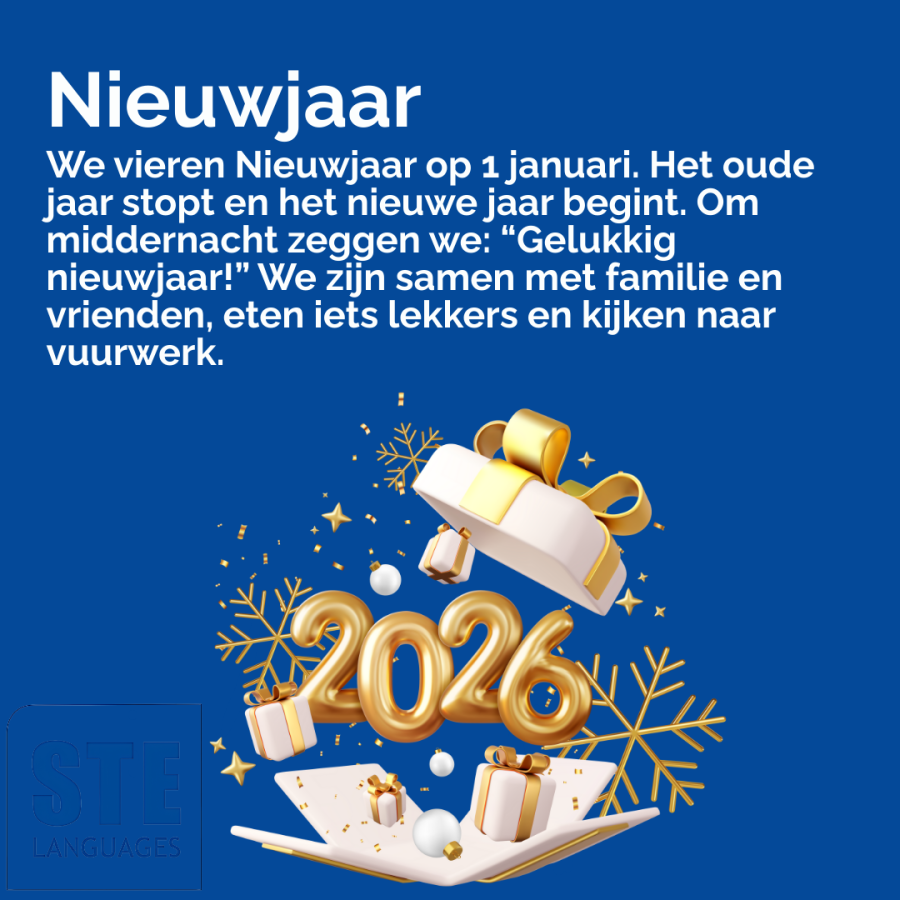
🏆 𝗪𝗼𝗿𝗱 𝗼𝗳 𝘁𝗵𝗲 𝗪𝗲𝗲𝗸: 𝗡𝗶𝗲𝘂𝘄𝗷𝗮𝗮𝗿 🎉
🧠 Type of word:
“Nieuwjaar” is a Dutch noun.
It means New Year, the start of a new year.
It is a time for new beginnings, celebrations, and good wishes.
For example:
👉 “We vieren Nieuwjaar met vrienden.”
(We celebrate New Year with friends.)
🟢 Synoniemen:
nieuw begin / jaarwisseling / New Year
👉 Example sentences:
• Met Nieuwjaar maken veel mensen goede voornemens.
• We wensen elkaar een gelukkig Nieuwjaar.
• Met Nieuwjaar is er vaak vuurwerk.
• Nieuwjaar voelt als een nieuw begin. ✨
🔸 Note:
Nieuwjaar marks the start of a new year and is a moment to look forward.
People celebrate with family and friends, watch fireworks, and make plans for the future.
It is a time of hope, happiness, and new opportunities. 🎆


